exhibition programme | paintings | tapestries | prints | chronology of a life | market | biography & bibliography | agents | news | contact
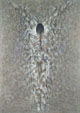
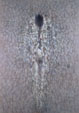
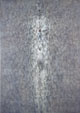
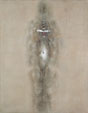
Human Image series (c. 1996 -2005)
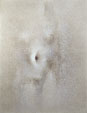
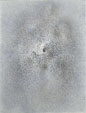
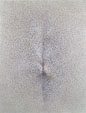
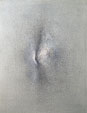
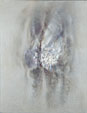
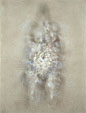
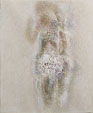
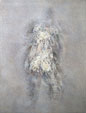
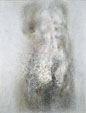
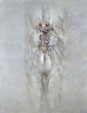
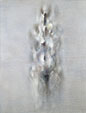
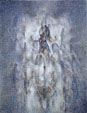
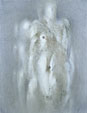
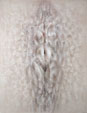
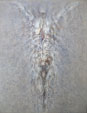
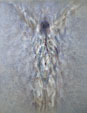
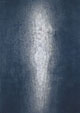
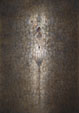
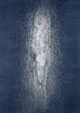
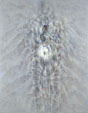
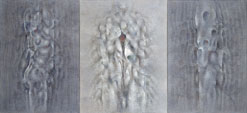
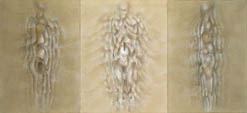
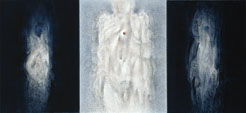
Embarks upon the Human Images, further developing his earlier preoccupation with the Presence series (1956-66).According to Caoimhín Mac Giolla Léith: 'Human consciousness - or its acceptable functional equivalents in le Brocquy's terminology, i.e. spirit, psyche - is thus newly perceived in the recent paintings as more inextricably bound up than it hitherto appeared to be with a physical universe about which much has been discovered since he painted the early Presences. Yet, despite this intriguing development in his work, it is the absolute consistency of le Brocquy's core concerns over half a century - as reflected, among other things, in his perception of the enduring relevance to his art of specific pictorial compositions - that is most remarkable. It reminds us that the more we know the more aware we become of the limits of our knowledge, and of the need constantly to refine and revise what knowledge we have. Despite many major developments in philosophy and the physical sciences over the course of the twentieth century the so-called 'mind-body problem' appeared no nearer an absolute resolution at the end of that century than it did at its beginning. That alone is enough to ensure the continuing value of Louis le Brocquy's exemplary long-term commitment to the painterly investigation of 'the mysterious state of conscious being.' ... | CHRONOLOGY OF A LIFE: HUMAN IMAGE
Introduction: The Human Image Paintings, Thomas M. Messer, Director Emeritus, Solomon R. Guggenheim Foundation, New York
The Human Image Paintings of Louis le Brocquy, Caoimhín Mac Giolla Léith, Lecturer in the Department of Modern Irish (Language and Literature) at University College Dublin
The artist remarks: The preoccupation with the human head persisted in one form of another for a period of some thirty years. It was for me a fascinating research, from which I learned much. It might have been continued indefinitely, but gradually the old vision of the early 'Presence' paintings returned to me insistently, demanding some further reach towards inwardness. The 'Presence' paintings, like the head images, were painted directly in white on white, whereas in these new, comparatively transparent works, the image emerges from a background composed of a succession of coloured glazes, one neutralising the other, producing a granulated surface caused by the texture of the canvas itself. I see these clustered granules or particles as a further kind of 'matrix' from which the central image might be seen to materialise. In the earlier works of this latter period, therefore, I tended to accentuate this granulation, particularly in the shadows of the image and even within the highlights. Gradually, however these particles began to structure themselves into rythmic movements or 'impulses' covering the greater part of the canvas and forming a more kinetic background from which the central image might emerge and radiate outward. I believe I have gradually learned from these last paintings something of the paradox that - although the essential and ultimate state of the human individual is aloneness - each one of us remains part of our physical, metaphysical, social and cultural environment, 'breathing,' as it were, inhaling and exhaling, absorbing and reaching outward within its complexity. I have learned to perceive the human presence as part of a wider background that has taken the form of a rhythmic, pulsatory force from which the central image emerges and into which it, in turn, expands. Some days ago I was interested to discover, on a beach in West Cork, not dissimilar rhythmic pulsations, naturally sculpted in the sand by an outgoing tide'.