exhibition programme | paintings | tapestries | prints | chronology of a life | market | biography & bibliography | agents | news | contact


Ancestral Heads series (c. 1964 - 1974)

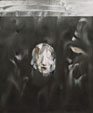
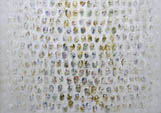
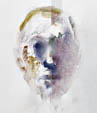
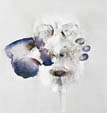
Following a period of profound dissatisfaction in which the artist destroys forty-three paintings, virtually the years output (December1963). Anne Madden recounts: 'That blight most dreaded by the artist had crept into him - the loss of inspiration. He had painted himself to a standstill. The paintings he had made appeared to him lifeless, contrived and without meaning, and at the end of the year he did away with them. He felt depressed, powerless.' Le Brocquy himself explains: 'Is it not the struggle of Jacob and the angel ? - the absolute commitment of the painter to his material, in which he can be almost destroyed by his material, defeated ... Sometimes the painter breaks away from the struggle and comes away with nothing. Those are the moments when the work, which is a record of the struggle, is destroyed by the artist, rejected.' The crisis will lead to the emergence of the Head series to become an enduring preoccupation over the next four decades. Discovers a vital source of inspiration in Polynesian heads, Musée de l'Homme, Paris (winter 1964). The artist is profoundly impressed by these objects reconstituting the human presence. As he recalls: 'Skulls, partly remodelled with clay, and then painted in a decorative way, often with cowrie shells for eyes'. Anne Madden who accompanies the artist to the anthropological museum recounts: 'These head images suggested to him a new human significance. He felt the over-modelling and painting implied a ritualistic laying on of hands, a recognition of the ancestor's entity; palpable marks from the outside which defined and celebrated the spirit within the reconstituted ancestral head'. The event kindles le Brocquy's interest in the Celtic head culture: 'Like the Celts I tend to regard the head as this magic box containing the spirit. Enter that box, enter behind the billowing curtain of the face, and you have the whole landscape of the spirit'. According to Dorothy Walker: 'The crystallisation of his interest in the remote past into a twentieth-century version of the old Celtic notion of the head as "the magic box that contains the spirit" is an intensification of a fundamental obsession: the desire to lay his finger on the pulse of the very earliest manifestation of art in Ireland, somehow to absorb the autonomy of that anonymous art into his creative energy and to re-show itforth in his own very different work'. Embarks on the Ancestral Heads series (c.1964-1975) the fourth distinctive period in the artist's work ... | CHRONOLOGY OF A LIFE: ANCESTRAL HEADS


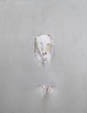
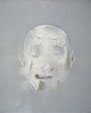
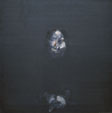
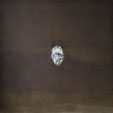
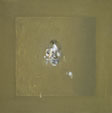
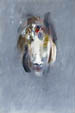
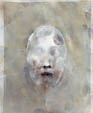
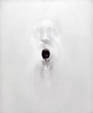
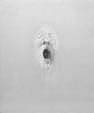
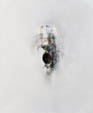
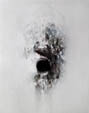
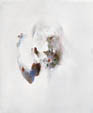
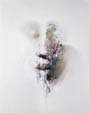
Paints Quatre Cranes Surmodelés et peints (1964; A.R. 155), Study in Profile (1964; A.R. 141), Ancestral Head (1964; A.R. 138). Anne Crookshank remarks: 'The head had been emphasised occasionally in his earlier painting, usually with a portrait connection. But, only after 1964, did he utilise it as an entity in its own right. The head was a totem, a symbol of mankind which materialises from an anonymous background suggesting neither time nor a specific place. Sometimes he called them ancestral heads and seemed to be conveying the message of man's immemorial existence and importance'. According to John Russell: 'Common to all this activity was the idea of the head as something supremely important that could legitimately be built and re-built, patched amd re-patched. The heads thus constructed could also have an ancestral quality and serve, therefore, as models, exemplars, amd dictionaries of virtue. And the heads in those transitional paintings do indeed have the battered, fragmented, voiceless and sightless look that we recognize in so many of the human images that have come down to us in much mutilated marble'. Emerging from amorphous backgrounds Seamus Heaney writes of the heads: 'Osip Mandelstam, in his extraordinary Conversation about Dante, says: "A quotation is not an excerpt. A quotation is a cicada. Its natural state is that of unceasing sound. Having once seized hold of the air, it will not let go." Louis le Brocquy's heads are in this way quotations from bodies, from lives even. We have no sense of them orphaned from their supporting frames or times. They take hold of the air, they probe it with a deep pure stare.' The artist explains: 'A great deal of the technical difficulty in these paintings comes from the fact that they are heads in utter isolation - without any particular circumstances, such as a collar and a tie, or a recognisable background. Now the difficult thing in my view is to make this isolated head so that it doesn't look like a mere sketch, which it isn't, nor like some kind of decapitation. The image has to emerge from some plausible matrix, beyond habitual circumstance or environment, as if outside time.' Bruce Arnold writes in The Sunday Independent: 'His reconstructed heads are attempts to capture in paint the character, the aura, the inner self, and give it artistic life. They are complex works as a result of this, and they need to be, as it were, unravelled ... The paintings reveal themselves slowly and deliberately, and they reveal themselves as far more powerful objects as a result of this'. Reaching towards the realisation of an interiorised human image, le Brocquy says: Clearly, it is not possible to paint the spirit. You cannot paint consciousness. You start with the knowledge we all have that the most significant human reality lies beneath material appearance. So, in order to recognise this, to touch this as a painter, I try to paint the head image from the inside out, as it were, working in layers or planes, implying a certain flickering transparency. What one is left with in the end - if I am in any way excited by the image that emerges - is the suggestion of some turbulence going on beneath the picture surface, beneath the external appearance of the image.'